

After Care Guide
Looking After Your New Hydroseeded Lawn
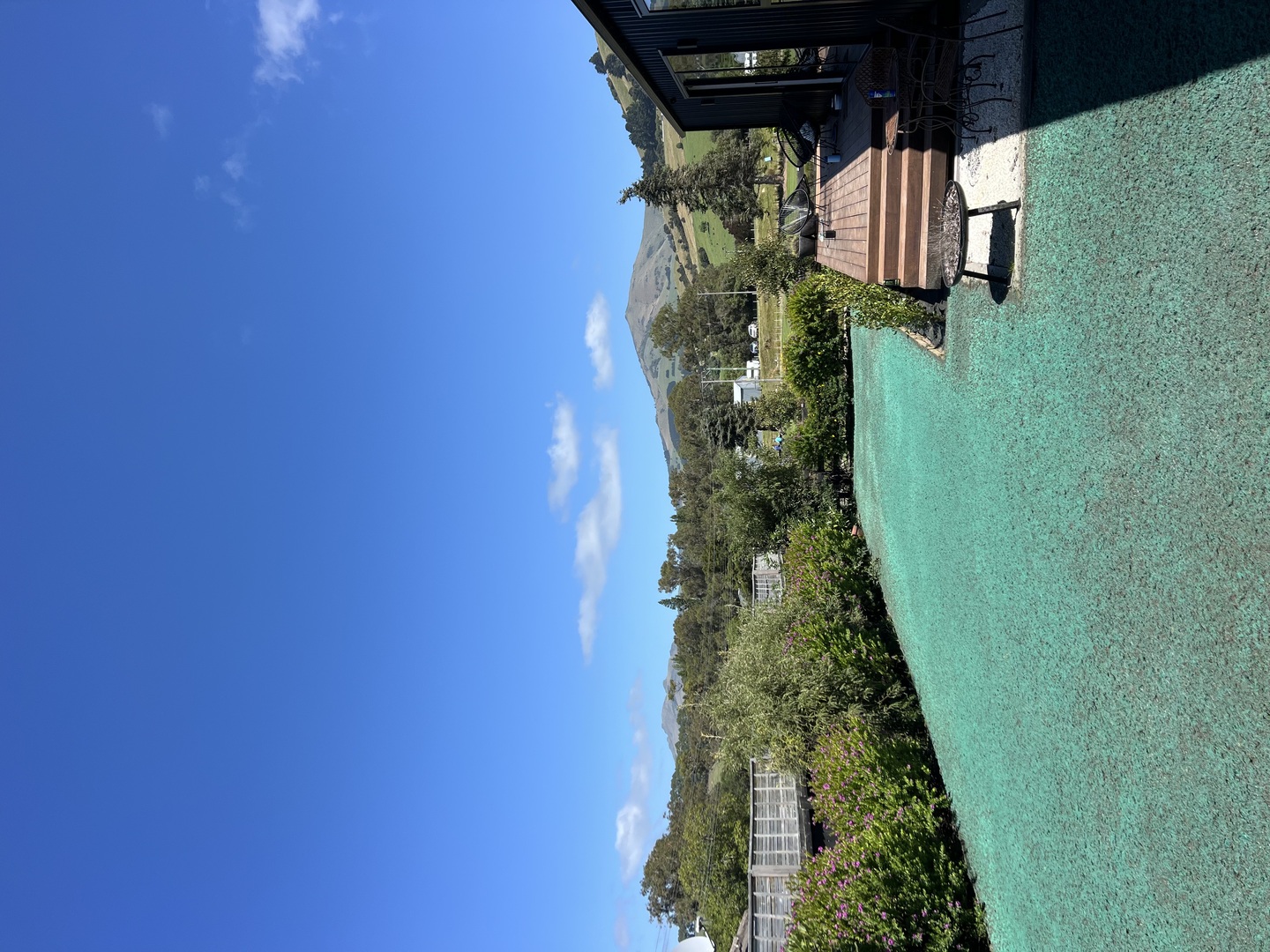
Congratulations on your new lawn! Once your section has been hydroseeded, a little care in the first few weeks will make all the difference. Proper watering, fertilising, and mowing are essential to help the seed germinate, strengthen, and grow into the lush, healthy lawn you’ve been waiting for. By following a few simple steps, you’ll give your lawn the best possible start and enjoy lasting results for years to come.

Instant Lawn After Care Guide
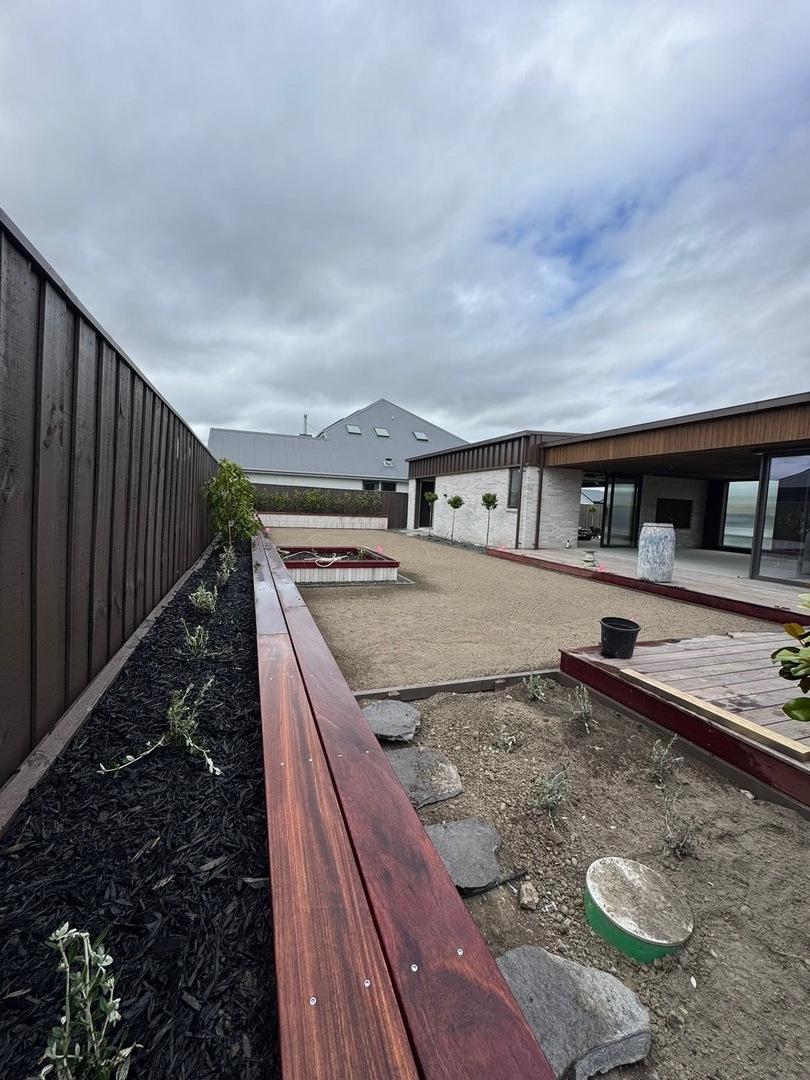
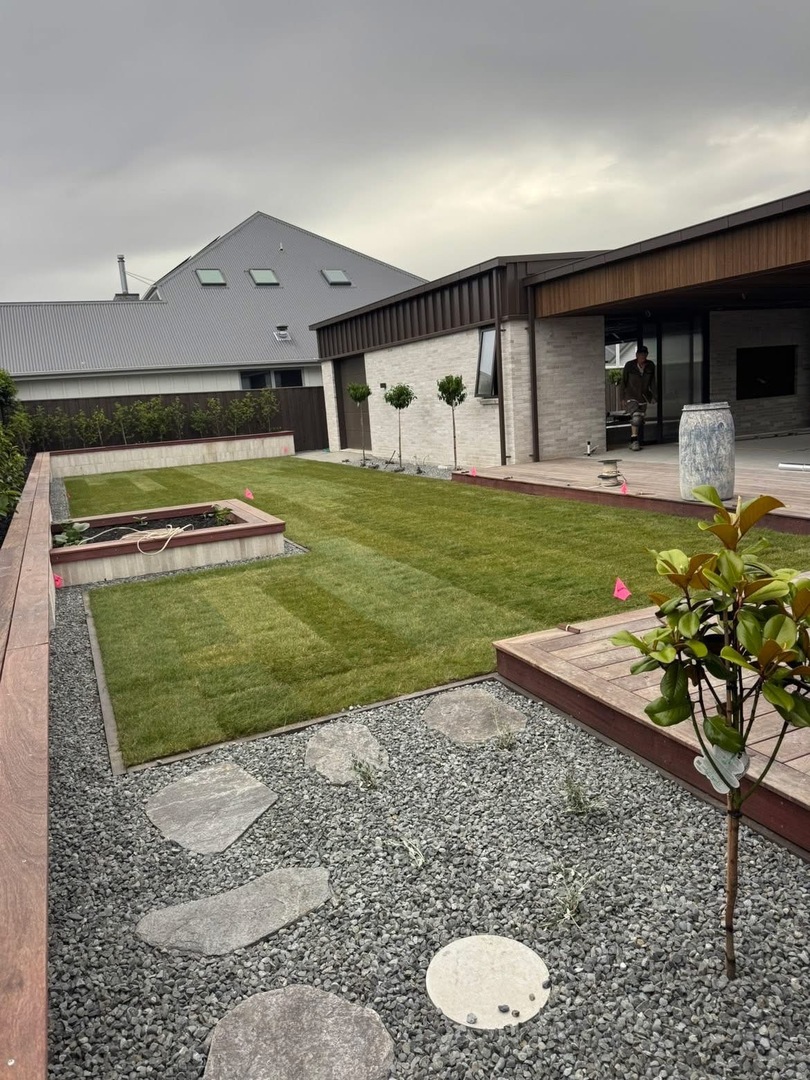
Easylawn Instant Rollout Turf is already a year old. It has been through the early traumas of germination, weed infestations, pest and disease threats. It has been mown, brushed, sprayed, fed, watered and rolled until it has become strong and mature enough to transplant to your location. It just needs some help to make the transition successful.
Watering Requirements
- The Turf mat and the soil beneath must be kept moist until the turf is well rooted, but that does not mean it should be kept flooded.
- In summer this could mean watering at least once a day, in winter, possibly not at all.
- Apply water until it has penetrated the Turf mat and the first 50mm of soil. Lift the corner of a few rolls to check.
- Watering in the early mornings is best so the sward will dry fairly quickly. This reduces conditions when fungal disease can thrive.
- Avoid watering in hot sunlight and don't allow the water to pond.
- Few people put sufficient water on when hand watering - use a sprinkler.
- A typical residential sprinkler gives sufficient water in about 20 minutes.
Fertilizing your lawn
- Your Easylawn comes with a high nutritional status. It will benefit from Prelay fertilizer added to the soil prior to laying.
- Focus on watering and allow the Turf to establish without further stimulation.
- If after 2-3 months the colour is 'off' and the vigor drops away (and it is not winter) then the turf needs feeding.
- Apply a general lawn fertilizer at 20-30g per square metre.
- Water in the fertilizer or apply during rain.
- If the response is negligible, have your soil tested and follow the recommendations.
Weed Control
- Weeds will appear in your new lawn.
- They come from seeds which have been dormant in the soil after being carried in by birds or wind.
- Weed Control product should be applied to your new lawn in conjunction with the fertilizing programme.
- Weed Control is an ongoing process
Mowing
- Your new lawn can be mowed as soon as the grass blades are about 40 mm high and the ground is dry.
- Mowing will stimulate more growth, so it is important to mow at the correct height to avoid “scalping” the new grass blades.
- Never remove more than the top 1/3 of the grass blade.
- Do not use a mulching mower until the lawn has been mowed 5 or 6 times with a conventional mower.
- During the fast growing periods, it is recommended that you mow your lawn twice a week.
- We recommend that you treat your lawn each March/April for Grass Grub and Porina.
Hydroseeding After Care
Now that your area has been Hydroseeded, you will need to follow these simple directions to ensure that the seed germinates and continues to grow into a beautiful new lawn:
Watering Requirements
It is essential that you keep the lawn moist at all times using frequent sprinkling, preferably morning and evening. It is easy to see where watering is needed as the mulch will appear drier and lighter in colour when watering is necessary. The first 21 days are vitally important as the germinating seedlings cannot be allowed to dry out or they will die.
Watering Tips
Water early and late when sunlight cannot cause excessive evaporation.
Do not allow the water to “pool” in any area. Hand watering works best until the lawn is more established.
Water should soak into the soil about 150mm to ensure deep rooting.
If using automatic sprinkler systems, set to water for only a few minutes several times a day.
Fertilizing Your Lawn
Your hydroseeding application has fertilizer mixed into the mulch to give the young seedlings the nutrients they require and will produce a “jump start”. However, a percentage of the fertilizer leaches through the soil and is not captured by the young seedlings. Until your lawn is fully established, you should apply fertilizer monthly using a high quality slow release fertilizer. After your lawn is well established, you should apply fertilizer about 4 times per year in conjunction with a weed control product.
Weed Control
Weeds will appear in your new lawn. They come from seeds which have been dormant in the soil after being carried in by birds or wind.
Weed Control product can be applied to your new lawn in conjunction with the fertilizing programme, once the lawn is established and the first few mowing’s have taken place.
Mowing
Your new lawn can be mowed as soon as the grass blades are about 40 mm high and the ground is dry. Mowing will stimulate more growth, so it is important to mow at the correct height avoiding “scalping” of the new grass blades. Never remove more than the top 1/3 of the grass blade. Do not use a mulching mower until the lawn has been mowed 5 or 6 times with a conventional mower. During the fast growing periods, it is recommended that you mow your lawn twice a week.
We recommend that you treat your lawn each March/April for Grass Grub.
Seasonal Lawn Care
New Zealand Spring - September, October, and November
New Zealand Summer - December, January, and February
New Zealand Autumn - March, April, and May
New Zealand Winter - June, July, and August
New lawns
- Make sure that your newly laid lawn is never short of water. This is most crucial for new instant lawns, particularly during summer. Water daily until the turf is firmly rooted (about two weeks). After this period reduce the frequency of watering’s to encourage the development of deeper and stronger roots. Check that the underlying soil is moist and that rooting is progressing well by lifting the corner of a turf. Weather conditions will dictate the amount and frequency of watering. Be certain that your new ready lawn has enough moisture to survive hot, dry or windy periods. Water areas near buildings more often where reflected heat dries the turf.
- Avoid walking on your newly laid lawn where possible especially after watering. This gives the roots an opportunity to knit together and will ensure that the surface remains smooth until the area is established.
- Begin mowing once the turf is well rooted. Make sure ground conditions are firm so as to maintain a level surface. Set the mower high so as to remove no more than 5mm of the overall height for the first few mowing. Then gradually reduce the mowing height to the desired height. We do not recommend mowing lower than 25mm. Have your mower serviced prior to your first mowing and then at least once a year.
Established lawns mowing
- Mow regularly and as often as necessary to maintain a neat appearance. The closer you cut, the more often you should mow.
- For most lawns the mower should be set to cut no lower than 25mm and should be used at least once a week, depending on the growth. Try to avoid leaving the lawn unmown for periods of weeks when the grass is growing fast.
- When reducing the height of cut never remove more than 1/3 of the length of the grass.
- It is best to mow when the grass is dry, but in prolonged wet weather mow when it is wet rather than let the grass grow too tall.
- Mow in winter if mild periods have encouraged growth.
Feeding
- Lawns growing on poor soils need more feeding than those on rich soils.
- Feed your lawn each spring, summer and autumn with a proprietary slow release lawn fertiliser at the recommended rate. A slow released fertiliser will slowly release essential nutrients to produce and maintain the green colour for months.
Rolling
- Rolling should not be necessary on most soils.
- A roller should never be used to put right surface irregularities, possibly caused by subsidence. These should be corrected using compost top dressing.
Weeding
- It is inevitable that weeds appear from time to time in the new lawn, spreading from other parts of the garden or from further afield. Remove these by hand or by using a weed killer specifically for lawns.
- Make sure that the weeds you want to control are specified by the weed killer you choose.
- Always buy a proprietary brand of weed killer and follow the manufacturer’s instructions carefully.
- If you use a 'weed and feed' product, check the instructions in case there are special recommendations for recently laid turf.
Moss
- Moss will develop in a lawn only if the grass is too weak to compete with it. The reason for the weakening of the grass may be waterlogged, compacted soil, mowing too close or too infrequently, inadequate feeding, and shading or very dry conditions. The cause should be identified and corrected.
- For short term control, various chemical treatments are available, but moss will reinvade if the grass is not invigorated.
- Some people like moss in lawns.
Scarifying
- The removal of the brown fibrous "thatch" layer which develops between the soil and the grass shoots is not always necessary. Only if the dead material is more than 15mm thick should any attempt be made to remove it.
- Scarifying can be beneficial to a lawn if done sensibly. It can also be very harmful if overdone.
- Some types of turf need less scarifying than others.
- Light raking by hand to raise horizontal shoots is worthwhile from time to time in the mowing season.
Aerating
- Using a garden fork or a special spiking tool relieves compaction and helps surface water to drain away. It also allows more air to reach the roots of the grass which aids healthy growth.
- Make sure the holes are at least 75mm deep - the deeper the better. On heavy soils a sandy top dressing should be brushed into the holes.
- Autumn is the usual time for this operation.
- Pay attention to gateways and other areas of concentrated use.
Watering
- On an established lawn watering is only necessary if you need to maintain a green colour. Established turf will not die if you do not water it, unless your lawn is on thin or very sandy soil.
- If you intend to water the lawn it should be done deeply and infrequently. Water the soil until it is moist to a depth of 150mm. If water runs off the surface before this depth of moist soil is achieved, switch off the hose or water another part of the garden before resuming. Water again when the soil dries out to this depth.
- A light shower of rain may not soak through to the soil and may have to be added to by watering.
Diseases
- The most common disease: Red thread disease makes bleached or pinkish patches on the lawn surface. Very often bright red "needles" are also formed at the tips of the leaf blades. Red thread is often linked to low soil fertility and can be discouraged by speeding up grass growth by giving a feed. Alternatively, use a proprietary fungicide at the recommended rate. Fusarium patch disease tends to occur when the air is mild, still and damp. It causes the leaf blades to collapse and yellowish-brown patches appear on the lawn. This is often a symptom of over-feeding in early autumn. This disease is usually more harmful than red thread and speedy attention with a fungicide (at the appropriate rate) is needed.
- Small toadstools often appear in the year after turf is laid. They are not damaging to the turf and will die out.
Shaded areas
- Decreased light intensity by tree shading weakens turf grasses, not only by reducing the quality of light but also by competing for nutrients and moisture.
- Prune lower limbs and thin crowns of trees to allow more light to penetrate.
- Increase the mowing height.
- Water deeply and infrequently.
- Adequately fertilise shady lawns but don't be too excessive with nitrogen.
After Care Monthly Maintenanance Schedule
Click here to view and download our Easylawn_Maintenance_Schedule.pdf
Seasonal Lawn Care Calendar
Spring
Begin regular mowing at the appropriate height once the grass starts to grow, clearing twigs and other debris beforehand, to avoid damaging the mower. Trim the lawn edges with a half-moon edging iron or spade. Feed with a proprietary slow release fertiliser in September or October and thereafter as necessary – frequently on poor sandy soils, less often on rich soils – to maintain good green colour. Remember the more you feed the grass, the more the grass will grow and the more often you must cut it. Control worms if necessary. Remove or treat weeds as they are seen.
Summer
Continue regular mowing. If you go on holiday, get someone to cut the lawns in your absence. If trailing stems develop in the lawn, a light raking will raise them and allow them to be mown off. Keep the lawn edges tidy using long handled shears or a weed eater. Feed if necessary. Water in dry weather to maintain green colour.
Autumn
Continue mowing as long as the grass keeps growing. Watch out for diseases and spray to control them. Remove fallen leaves from the lawn and control worms if necessary. Aerate the lawn if necessary, paying particular attention
to paths or heavily worn areas. Use top dressing compost to make good an uneven surface, improve drainage and generally improve the quality of the lawn. If you have a poor soil, an autumn fertiliser dressing may be made.
Winter
Have the mower serviced while it is not in use. Avoid walking on the lawn if possible when the ground is waterlogged or frost or snow is on the grass. If mild weather allows grass growth, this may be “topped off” to maintain a neat appearance.
After Care Monthly Maintenanance Schedule
Click here to view and download our Easylawn_Maintenance_Schedule.pdf
Repairing Damaged Lawns and Common Problems
Grass Grub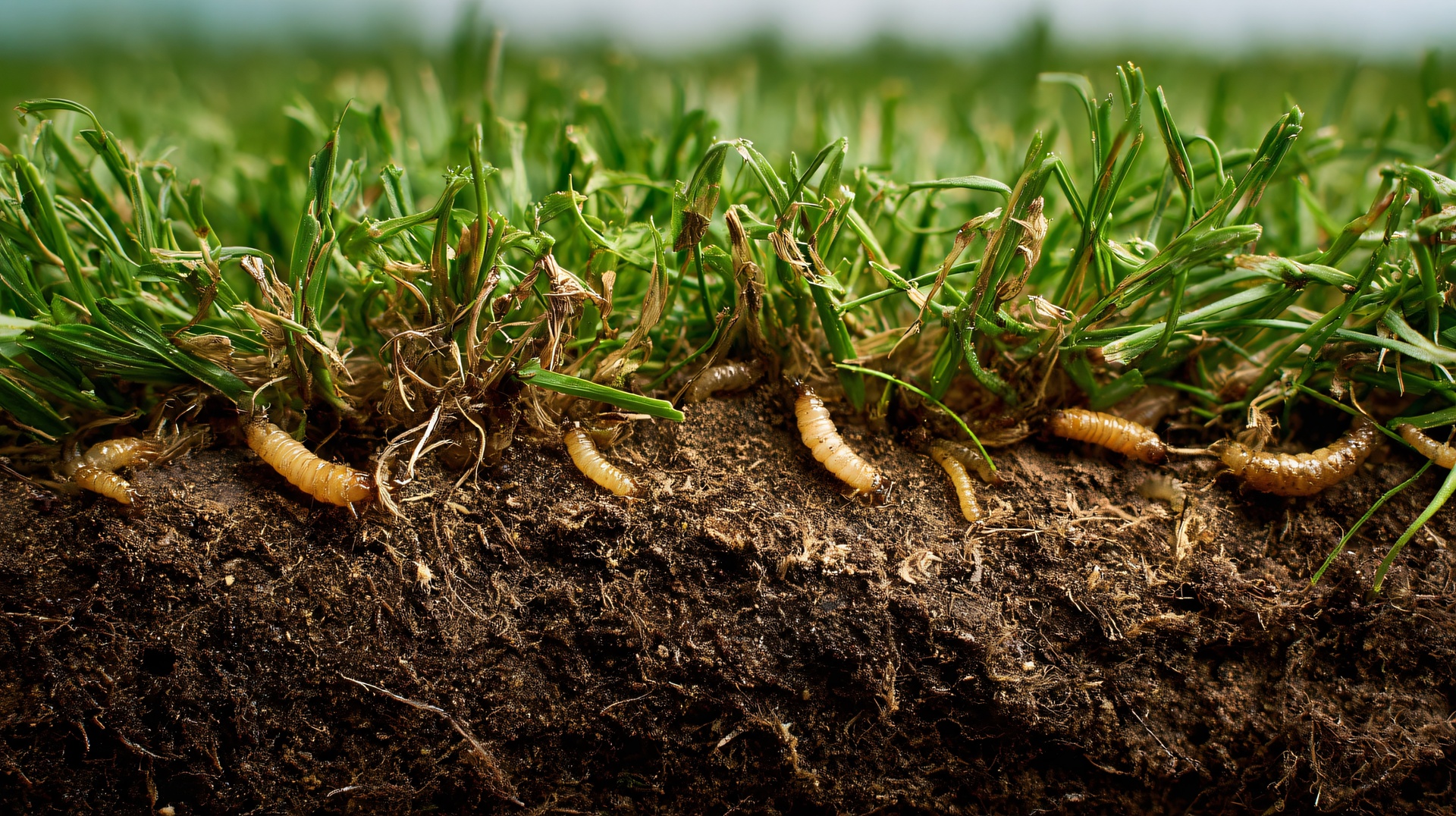
What is Grass Grub?
Grass Grub (Costelytra zealandica) are the larvae or immature stages of the common brown beetle that appears at dusk in spring and summer. While the beetle can cause economic problems the grub (larvae) is a serious pest of lawns.
Click to read more about Grass Grub identification and control.
Annual Poa
Botanical name: Poa annua
Family name: Poaceae
Overview
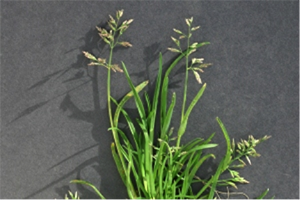
Annual poa has been called by many different names, sometimes referred to by its botanical name Poa annua, or simply poa, or names such as winter grass, annual blue grass and annual meadow grass.
It is one of the more common and troublesome weeds in turf of temperate parts of the world, and yet it often isn't readily noticeable. This is because it is a grass itself, and quite a small grass, so it can look just like another turf grass. Because of this, some green-keepers have decided simply to live with it and even encourage it within their turf. But other green-keepers consider it to be a weed because it is very short-term in nature, dying off as soon as the weather becomes a bit dry, or there is too much treading of the turf with sports being played on it.
Click here to read more about Annual Poa identification and control.
Paspalum
Botanical name: Paspalum dilatatum
Family name: Poaceae
Overview
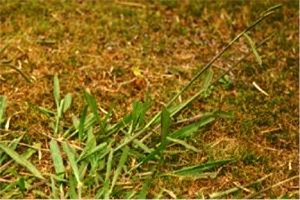 Paspalum is a grass weed which has very short stout rhizomes, which join plants together to form dense clumps. This weed is mainly a problem in turf, as it forms unsightly clumps in lawns which are difficult to remove selectively. The seed-heads are formed on tough stems, which generally do not get cut by reel mowers.
As paspalum is such a large grass, it also grows successfully in waste areas. It can cause problems in orchards too, as it is fairly resistant of many of the herbicides used under fruit trees. In pastures, it can be debated whether paspalum is good or bad, as it does provide feed during dry summers, but it can result in poor animal production over winter because it out-competes perennial ryegrass in summer, then when it grows poorly through winter, there is less ryegrass available to give winter production. As paspalum needs warm conditions due to being a C4 species, it is mainly only a problem in the North Island, and this is also why it is generally not very active in winter.
Click here to read more about Paspalum identification and control.
Couch
Botanical name: Elytrigia repens
Family name: Poaceae
Overview
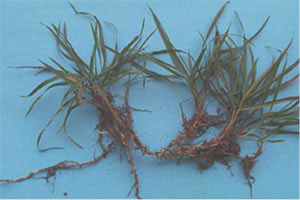 Couch (pronounced "kooch"; Elytrigia repens Poaceae) is one of the most troublesome rhizomatous weeds in flower gardens and crops, competing for light, nutrients and water, and generally looking unsightly in gardens. It was formerly known as Agropyron repens.
Although most perennial weeds do not tolerate constant disturbance by cultivation, couch is one of the best perennial weeds at re-growing rapidly following disturbance and building up food reserves in the rhizomes again, ready for the next disturbance. Although it is found throughout the year, it tends to be less active over winter. It often grows unnoticed in ryegrass pastures because the leaves and flower stems look much the same as ryegrass. But when the paddock is cultivated to grow a crop, it is suddenly very noticeable as it regrows rapidly from the uncontrolled rhizome system to compete strongly with newly sown crop seedlings.
Click here to read more about Couch identification and control.
Wireweed
Botanical name: Polygonum aviculare
Family name: Polygonaceae
Overview
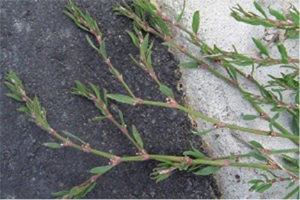 Wireweed is closely related to willow weed, and is also a summer annual, but is able to establish even earlier in spring than willow weed and most other summer annuals. It tends to establish in quite wet soils, and is often found in crops established early in spring when the soil is wetter than is ideal for crop establishment. It is also commonly found in gateways and along paths where it can establish in the bare soil caused by treading. Once established, it is very tolerant of treading. In turf, it can establish in sports grounds where grass has been damaged by winter sport, such as goal mouths.
Click here to read more about Wireweed identification and control.
Onehunga Weed
Botanical name: Soliva sessilis
Family name: Asteraceae
Overview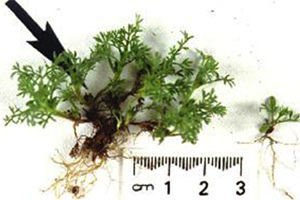
Turf weeds that put prickles in your bare feet when you walk across a lawn are never popular, especially in home lawns and recreational areas. Onehunga weed is probably one of the most hated turf weeds in New Zealand for this reason. It is an annual weed which is very small in size, usually fitting beneath the blades of the mower without barely being touched each time the lawn is mowed.
It normally acts as a winter annual. This means it spends most of summer as a dormant seed in the soil. It germinates in autumn once the soil becomes moist but before the lawn recovers from summer dryness. If the lawn cover hasn't died back over summer, Onehunga weed seedlings have much more trouble establishing. Once they are established, the plants grow throughout winter then produce clusters of spined fruits near ground level (arrowed in the top picture) ready for some unsuspecting passer-by to step on them and distribute the fruits elsewhere in the lawn in their feet or jandals. Once the lawn begins to dry in summer, the plant dies, having completed its life cycle, though the spiny fruits are often left with spines sticking upwards even though the plant has died. It doesn't always grow as a winter annual though, as it can also establish in spring under some circumstances.
Click to read more about Onehunga Weed identification and control.